

Midweek Scattershooting while wondering…
Whatever happed to Max Headroom?

This week’s brain droppings
Quote of the Week - Whose voices do we hear?
30 Minutes – How long is 30 minutes notice when everything and everyone you love is at stake?
Mike’s Video Break – Reading Slowly
Musings on Sunday’s Gospel – Aging, Agency and Agape.
The Last of Us – How we grieve.
Quote of the Week
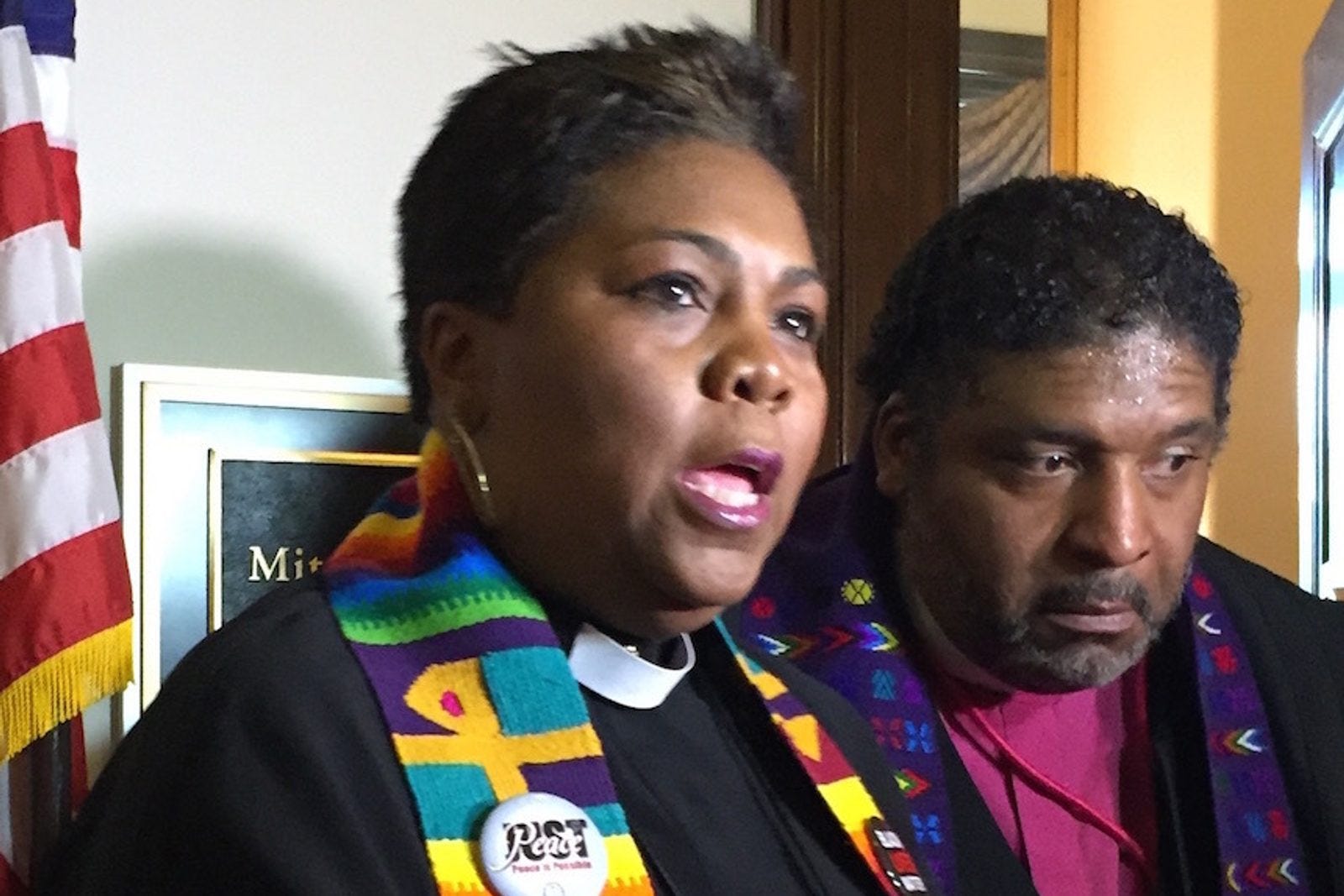
“There are NO voiceless people, only those who do not have an audience.”
― Traci Blackmon
Point and amplify.
Point and amplify.
I have a platform. I have an audience. There are no shortage of people who are listening to what I have to say … whether what I have to say is worth listening to or not.
Privilege isn’t a bad word. Privilege is power … and whether it’s good or bad depends on how you use it.
The “platformed” box is one of many privilege boxes I can check … and Traci is one of many people who is teaching me how to use it. And I am still learning.
Before we headed out into the streets for a protest once, Traci pulled me aside.
The press is going to come to you, she said.
They’re going to come to you because you’re a white male clergyperson.
You make them feel safe.
They’re counting on you to give the respectable quote that will keep their viewers comfortable
(which will keep them watching and keep the money coming in… never forget that journalism is a business first in this country).
“Don’t talk to them,” she said.
“Point to them,” Traci said … pointing to the young, black queer leaders who were the real power and vision in this movement.
They are counting on you wanting to get your face on TV. But the best thing you can do with your power is to point to them. If any of us talk, that’s the only voice that will be heard. If we all point to them, they will have to quote them.
When I stood in the pulpit the past 8 years, one of the things that was on the forefront of my mind is who I can amplify.
That’s why you rarely hear me quote white men in my sermons.
It’s not that there isn’t wisdom that comes from us … it’s just that it’s readily available.
Who doesn’t have an audience?
Whose voice is getting drowned out?
How can I point to them?
How can I amplify them?
I have a platform. I have an audience. And probably you do, too.
Who can we point to?
Whose voice can we amplify?
Who should I be listening to … and pointing to … and amplifying? Leave a comment and let me know.
30 Minutes
30 minutes is not a lot of time.
It’s a sitcom episode.
It’s half a class period in high school.
It’s an inning and a half of major league baseball.
It’s also how long citizens of Beirut were given to evacuate before Israel hit them with airstrikes this week.

30 minutes is not a lot of time.
It’s even less when you’re body is in shock, when fight or flight has kicked in.
It’s even less when you don’t know where your family members are.
Or what to grab.
Or where to go.
It’s even less when at the end of those 30 minutes everyone and everything where you are standing right now … where perhaps you have lived your whole life … will be vaporized.
This isn’t the first time this has happened. Amnesty International issued this statement last October when Israel launched similar airstrikes against southern Beirut:
“The warnings issued by the Israeli military to residents of Dahieh, the densely populated southern suburbs of Beirut, were inadequate. Our analysis shows that not only did the warnings issued by the Israeli military include misleading maps, but they were also issued at short notice – in one instance less than 30 minutes before strikes began – in the middle of the night, via social media, when many people would be asleep, offline or not following media reports,” said Agnès Callamard, Amnesty International’s Secretary General.
And the residents of southern Beirut were lucky. Residents of Gaza often get no warning at all.
Imagine it for a moment.
Right now if you got warning that you had 30 minutes to evacuate your house before it was bombed, what would you do?
Are you even home?
Do you know where your family is?
Do you know what you would be able to grab?
Do you know where you would go?
Now, you might say, if you live in one of these areas, wouldn’t you be prepared? Like when you live in an area adjacent to a fire evacuation zone. Wouldn’t you have a “go bag?” and plans of where to go? Wouldn’t you be prepared.
So think about that, too.
Think about living every day … for weeks, months and even years … knowing that at any time the home you have built where your family is could be bombed into rubble … and if you are lucky you would have 30 minutes to flee.
Yes, you might have a go bag.
Yes, you might be incredibly careful to know where your family is at all times.
Yes, you might have an escape route planned and a hopefully safe destination identified.
But imagine living like that every day.
Day after day.
Week after week.
Month after month.
Year after year.
Imagine what that does to your nervous system, to your body, to your spirit.
This is the life of Palestinians. This is life in Gaza. In the West Bank. In Southern Beirut.
And the bombs that are Damocles’ sword precariously dangling precariously above their head are paid for by you and me.
30 minutes is not a long time.
30 minutes is how long it has taken me to write this much of this substack.
If I were Palestinian, 30 minutes, if I was lucky, might be all the time I had to save my life.
And at the end of that 30 minutes, if I was lucky, my family and I would still be alive … but the home we had built would not.
30 minutes is not a long time.
But that’s what is considered “fair warning” in today’s world.
What would you do if you had 30 minutes left?
Mike’s Video Break – Reading Slowly
I get an email every day from TED highlighting a talk they think I’d like. Today this is what came in my inbox. It was called “What reading slowly taught me about writing” by Jacqueline Woodson.
Please stop, pause, take 10 minutes and give it a listen.
I have been taught to read quickly. I have prided myself on reading quickly. I listen to audiobooks on 1.3 speed. I count how many books I read each year (12 so far).
Sometimes I slow down … but it’s not my usual speed. Listening to this talk has me thinking differently about that.
Right now, I’m reading three books … why not just one? (Well, probably because they are different and I pick up what I’m in the mood for.)
More to the point, what does it mean to develop the practice of slowing down?
I’m reading Dream Count by Chimamanda Ngozi Adichie. It’s gorgeous prose … diving deeply into the lives of family members and friends from Nigeria and looking at life from their divergent yet connected perspectives. I found myself speeding through it because that was the pace I was used to.
Then I realized this is like sprinting through the Metropolitan Museum of Art.
I would never do that. When I go to an art museum, I love to stand in front of a work of art and just take it in… just let it wash over me.
Why not with books?
Why not with conversations?
The pace of life is getting faster and faster … it is literally kiiling us. And yet perhaps even worse it is robbing us … it is robbing me … of the best parts of being alive.
I’m going to try to slow down. Will you join me?
Third Sunday of Easter – Aging, Agency and Agape
“Very truly, I tell you, when you were younger, you used to fasten your own belt and to go wherever you wished. But when you grow old, you will stretch out your hands, and someone else will fasten a belt around you and take you where you do not wish to go."
A little more than 2 years ago, I had the most difficult conversation with my father.
Since my mother died of cancer, he had been living with us. He was in his 90s and had Alzheimer’s and couldn’t live on his own. Now, after two years, he was approaching that place where he required care that we were not equipped to give him.
We were fortunate. My dad had an annuity so he could actually afford to go into a nice care facility. Even more, we were able to find a great place less than a mile from where we lived.
And, it was a place he didn’t want to go.
He knew it. I knew it.
What made it worse was that when I was in fifth grade, my grandmother was in a nursing home … back then they weren’t as nice as the place where my dad moved briefly before he died … and one day my dad and I visited her there and as we were driving away, he turned to me and said:
“Promise me you’ll never put me in one of those places.”
I was surprised, so I said the only thing I could … 100% sure I would live up to it.
“I promise.”
And even though we didn’t forsee this circumstance and even though, as friends told me, where he was going was very different from “those places” that were like where my grandnana was … I still struggle with that decision.
When my dad first moved in with us and out of the house he loved in Tucson, he quoted this passage from this Sunday’s Gospel to me.
“But when you grow old, you will stretch out your hands, and someone else will fasten a belt around you and take you where you do not wish to go."
He said it with a smile … but I also knew the pain was real. He wasn’t angry. He was just saying this was the way it was.
There is a wonderful book by Atul Gawande called Being Mortal. He acknowledges the truth behind this scriptural passage … and another deep truth as well.
Yes, as we age, just as when we are very young, the arena in which we are allowed to exercise agency over our lives shrinks. When you have something like Alzheimer’s, it shrinks even more.
And yet, there are still areas where you can exercise agency. Where you can, as Gawande says, “still write your own story.”
Writing our own story. Having agency over our lives, our bodies … it is an essential part of being human.
I have spent most of my life as a pastor in community with people who are older than me. Increasingly, especially as the Boomer generation moves into retirement, we are having a huge wave of people who are entering into the final chapters of their story.
These are amazing people. People who have written amazing chapters of their life story so far. And they aren’t done.
Even when my dad moved into assisted living, he still made choices. He reached out to people. He wanted to help. He listened … even when he couldn’t remember what people had just said to him.
He had been led to a place he didn’t want to go … and even on his last day of life, he was treating the nurse that came to tend to him with grace and compassion.
He wrote his story up to the end.
That is one of the gifts of living in multigenerational community. Yes … there are times where we have to tie a belt around someone and lead them to where they don’t want to go. I know that day will come for me as well.
And … we can continue to do it with grace and compassion.
Even though the sphere in which agency can be exercised shrinks, we can help keep it alive as long as it still has area at all.
Because you are never too old to write an amazing next sentence or word.
And we are never too young to be gifted by it.
That’s agape … self-giving love … realizing that there is never a time where we cannot give each other the dignity of letting them write whatever piece of their own story they still can.
Aging. Agency. Agape.
That is our job. That is our joy.
The Last of Us – How we grieve.
WARNING – THE LAST OF US SPOILERS
I don’t play the video game that The Last of Us (HBO Max) is based on, so I wasn’t prepared when a week ago last Sunday they killed off one of the two main characters – Joel, who had been the protector of Ellie, the teenager who was the other main character.
The episode where Joel was killed is one of the most powerful episodes of television I can remember. And yet this past Sunday’s episode was powerful in a different way.
Four scenes have stuck with me.
The first scene is Joel’s brother Tommy alone in a room with Joel’s dead body and he is slowly washing it. Slowly. Lovingly. Washing the body of the brother he shared a life with. It is a scene of beautiful devastation. There are no words. No tears. Just love and care and emptiness.
That is what grief looks like.
Next … Ellie — played brilliantly by Bella Ramsey — is in the hospital recovering from her own wounds. She opens her eyes and yet she doesn’t see what is in front of her … she sees the final blow of Joel’s murder … and she lets out a deep, blood-curdling scream.

That is what grief looks like.
Raw. Primal. Soul-tearing.
Scene two. Ellie is alone in Joel’s house. She goes to his leather jacket in the closet. Now, Ellie is as tough as they come … and she certainly doesn’t want anyone else to see her any differently. Yet she grasps the jacket and collapses into it and bawls.
It reminded me of this scene in American Beauty where Annette Bening collapses into her husband’s clothes as she she smells him on them after he has been killed.
Alone. Grieving. Crying. Wailing alone.
That is what grief looks like.
Scene three. There is a town council meeting. Ellie wants to lead a posse to execute Joel’s killers and the town is debating whether to do it or not.
While Joel was being killed, the town was being overrun by hordes of zombies and scores of people died. And someone stands up in front of the council and says “look, everyone here has lost someone.”
There is a struggle here. How do you deal with one person’s intense pain over loss when everyone is in their own intense pain over loss. How do we hold all that together.
That is also what grief looks like.
What struck me is that these scenes stood together … and there could have been many more. There are so many, many ways to grieve. And we all have much to grieve.
The thread that tied all of them together was honesty. Each person was allowed to grieve in their own way.
That is us at our best.
I admire your compassion and empathy for people