
Nothing is Wasted
A sermon given at Christ the Good Shepherd Episcopal Church, Los Angeles, on Sunday, August 2, 2026

Nothing is wasted.
Sixty years ago, at Antioch Baptist Church in Camden Alabama, they gathered for the first time.
They came from Gee’s Bend, Alberta, Rehoboth, and neighboring communities in Wilcox County.
Over the past months, they had lost their jobs, credit, even their housing because as black people in Alabama they had dared register to vote or participate in civil rights demonstrations.
They came because of a vision.
A vision grounded in a truth they had heard in their churches and in reading their Bibles.
Nothing is wasted.
They had known this truth for a long time.
It had been preached by the quilts they and their mothers and their mother’s mothers and so on had sewn for generations.
You see, where others might see fabric remnants or scraps of cloth as something to be tossed aside, they had known different.
Perhaps they had known it because they knew themselves what it was like to be tossed aside, their humanity denied, their potential mocked.
Perhaps they had created beautiful quilts out of remnants as a resolute statement of their own beauty.
Whatever the reason, be it remnants of cloth or remnants of people, the truth was the same.
Nothing is wasted.
One day, an Episcopal priest from Wilcox County, Francis Walther, had noticed some of these beautiful quilts hanging on clotheslines outside Black homes.
Having an eye for American folk art, he realized these quilts could be sold in New York to generate income for families who were being economically punished for participating in the Civil Rights Movement.
But that spark of an idea isn’t the story.
And that’s where “Ma” Abrams and her daughter, Estelle Witherspoon, come in.
Ma and Estelle took Walther’s idea and realized this could be much more than a one-time fundraiser.
If the white government and powers in Alabama thought they could punish them economically for marching and registering to vote, this could be the way they could generate their own economic power.
Estelle was an organizer.
She had marched from Selma to Montgomery.
She had done shifts as a poll worker.
She knew there were quilting bees all over Wilcox County … so she began to spread the word.
And on March 26, 1966, more than 60 black women crowded into Antioch Baptist Church and formed the Freedom Quilting Bee, one of the first black women’s cooperatives in the United States.
Far from being just a one-off fundraiser, the women of the Freedom Quilting Bee negotiated contracts with major retailers like Bloomingdale’s, Saks Fifth Avenue and Sears Roebuck, which ordered more than 100,000 corduroy pillow covers from them over the next decade.
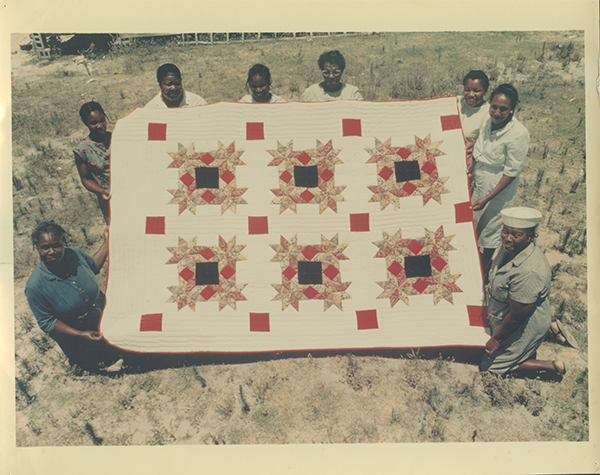
The Freedom Quilting Bee created jobs in one of the poorest counties in America and every cent of those profits was reinvested back into their community.
After just three years, they purchased 23 acres of land and built a 4,500 square foot sewing center that in addition to being a home for the Freedom Quilting Bee became a community hub offering daycare, afterschool tutoring, summer reading programs, employment and meeting space for community organizing.
It wasn’t the first time quilting – literally the transforming of worn and discarded cloth into something beautiful and useful -- had been a tool of liberation and proclamation.
And it wouldn’t be the last.
During the 1800s, the underground railroad encoded messages of survival and freedom on quilts hanging outside homes.
One quilt square had a monkey wrench in it … a symbol for a freed African American blacksmith who could travel between plantations. When the time was right for people to attempt escape, someone would hang a quilt with the monkey wrench square.
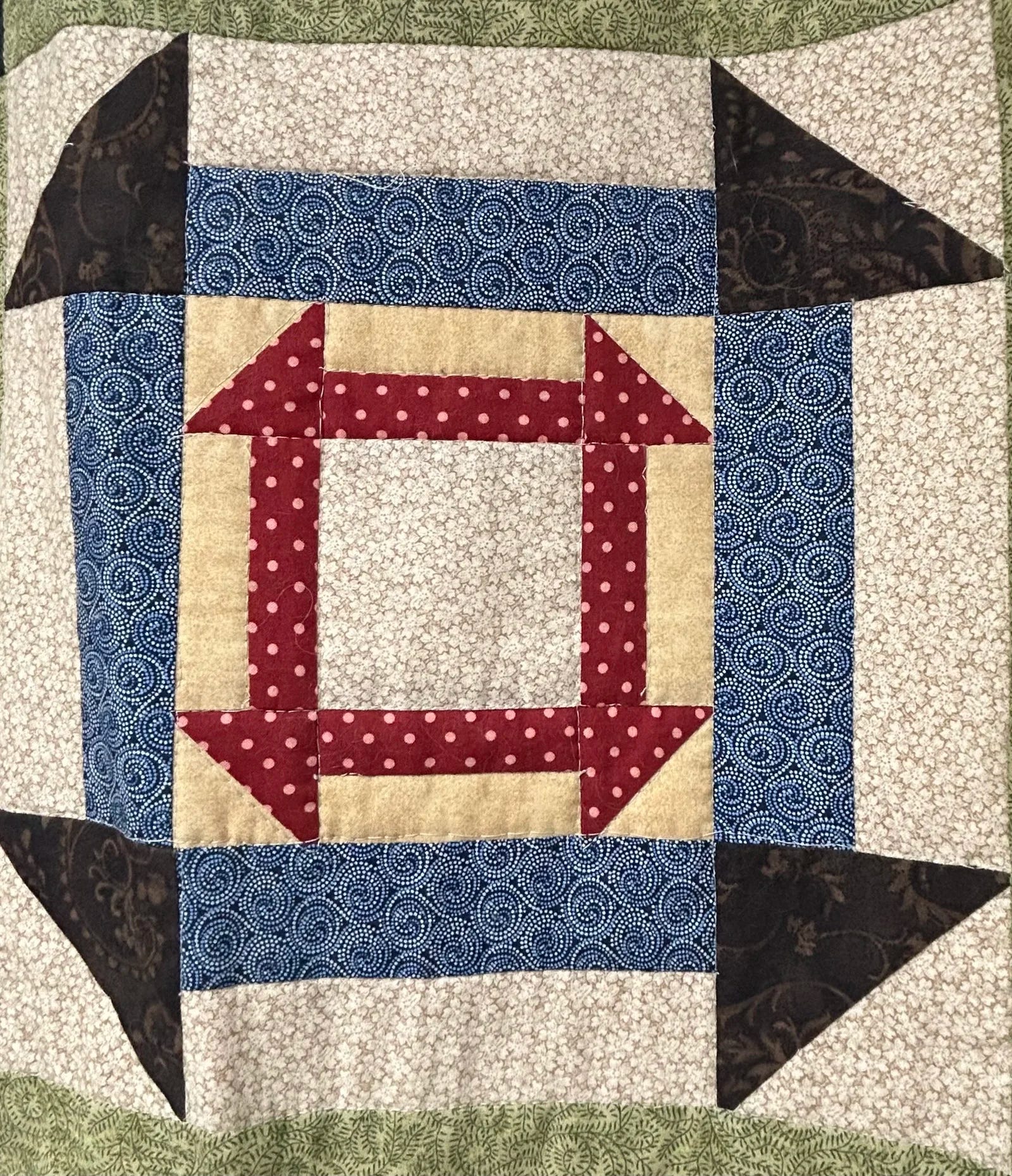
When a square with a wagon wheel was hung that meant safe transportation was on its way.
In the 1980s and 90s as people living with AIDS were being stigmatized, dehumanized and discarded by a society afraid not just of the disease but hostile to gay, lesbian, bisexual, transgender and queer images of God themselves, grieving friends and family – sometimes partnering with the dying themselves – took discarded pieces of cloth and created the largest community folk art project in the world … the AIDS Memorial Quilt.
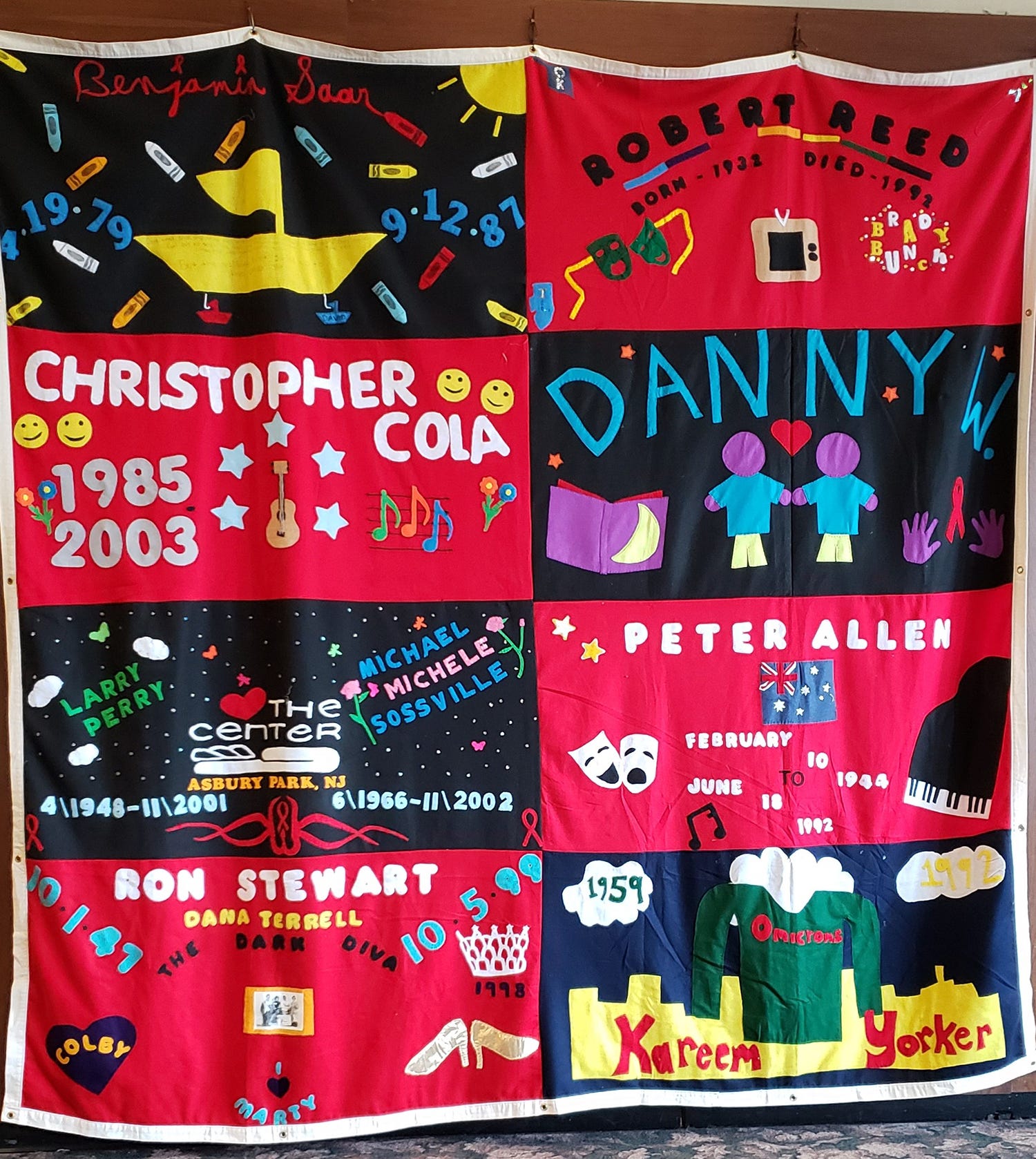
More than 50,000 panels commemorating more than 700,000 names of people who have died of AIDS. If you spread it out, it would cover approximately 1.3 million square feet – or about 22 football fields.
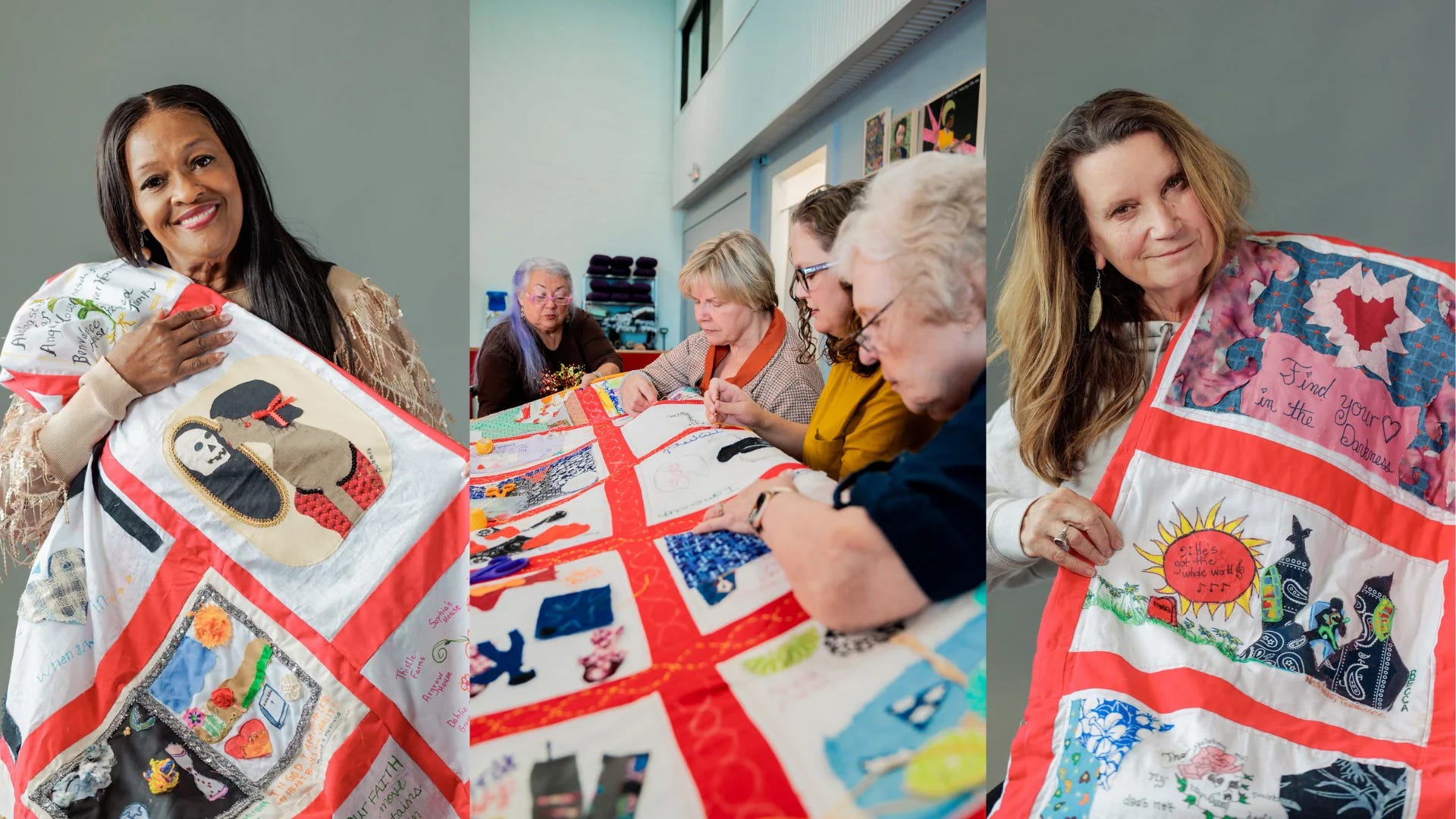
And even today, women who are survivors of child sexual abuse, trafficking, violence, drug abuse and more, women who have been commoditized and traumatized and dehumanized and finally tossed aside as worthless , women from across the country and around the world are taking scraps of cloth and making quilt squares incarnating their experiences of violence and overcoming … and so far have stitched them together in 11 quilts that form a bridge between each woman to hold space for one another to tell their stories.
It’s called the Remnant Project, and much like the Freedom Quilting Bee, the spark of the idea came from another Episcopal priest in the South, the Rev. Becca Stevens, founder of Thistle Farms.
I have heard this morning’s Gospel so many times. Probably all of us have.
Five loaves and two fish feed 5,000 people. It’s a miracle. Or at least the most effective feeding program of all time.
And … I keep coming back to this line:
“And all ate and were filled; and they took up what was left over of the broken pieces, twelve baskets full.”
We know what that is like all too well.
The crowd had eaten. Everyone was full. There were remnants left over but nobody had any need of them.
We know what that is like all too well.
We are a culture that functionally believes people are disposable.
We see it in how ICE and border patrol agents snatch people from their homes and toss them across the border to uncertain fates … as if they don’t matter not only to the communities they inhabit but to God.
We see it in how we permit people to live on the streets because we choose to spend our resources on more for those who have than on basic human dignity for those who continually go without.
We see it in how our political system continues to dismantle the progress that Estelle Witherspoon and her sisters in the Freedom Quilting Bee made more than a half century ago, stealing the franchise away from black and brown people.
We see it how an economy and culture that equates productivity with value discards us as we age … particularly women … as if the only worth a human being could possibly have is the ability to turn a profit and without that there is no value at all.
“They took up what was left over of the broken pieces.”
The Greek word for “taking up” is ἦραν (Eran) … it’s the same word Matthew uses earlier in this chapter to describe John the Baptist’s disciples picking up and carrying John’s body away after his beheading.
There is a care to “taking up” in this usage. What is being gathered up is something precious.
The church needs to hear this.
The church needs to remember this.
Our churches have become too indistinguishable from the capitalist system in which we are embedded. We call churches “successful” only when they grow in numbers and especially in giving … and we know this because we let a church be a parish when it is self-sufficient financially and the statistic the church cares most about is average Sunday attendance .. or how big are you.
We love the image of the five thousand … of the huge crowd hearing Jesus and being fed.
We love it because in the logic of the world it makes us feel successful and powerful.
And yet that isn’t the end of the story.
Nothing is wasted.
They took up what was left over of the remnants.
Nothing is wasted.
Nobody is disposable.
You are not disposable.
The psalmist cried “the stone the builders rejected has become the cornerstone” … the psalmist was speaking of David, the queer son of Jesse who was left out in the field when Samuel came looking for a king.
Later in Matthew’s Gospel, Jesus uses it to refer to himself.
The church is supposed to be the remnant, the discarded, the broken pieces left over. The very center of our worship, the Holy Eucharist, proclaims this.
Nothing is wasted.
Nobody is disposable.
Every remnant matters.
Every remnant is a pathway to power.
Every remnant is an underground railroad to freedom.
Every remnant is a passionate remembrance of what was and what can be again.
Every remnant matters.
There is no such thing as too small.
Too powerless.
Too useless.
Every remnant matters.
Great things are made from remnants.
Remnants tell the story.
Remnants lead the way.
Nothing … nothing … nobody.
Is wasted.
That was so powerful. Thank you Mike your filled with God's spirit and love and hope!!!!!!
Right on, Mike... We miss you
... God bless you...
GDick and Jan Swanson