

The cell less viewed
Gratitude for those with names lost to history ... but not to those who knew them ... and whose impact continues to transform our lives.

Last Saturday morning in Cape Town, I visited Robben Island, as nearly everyone does, because of one person — Nelson Mandela.
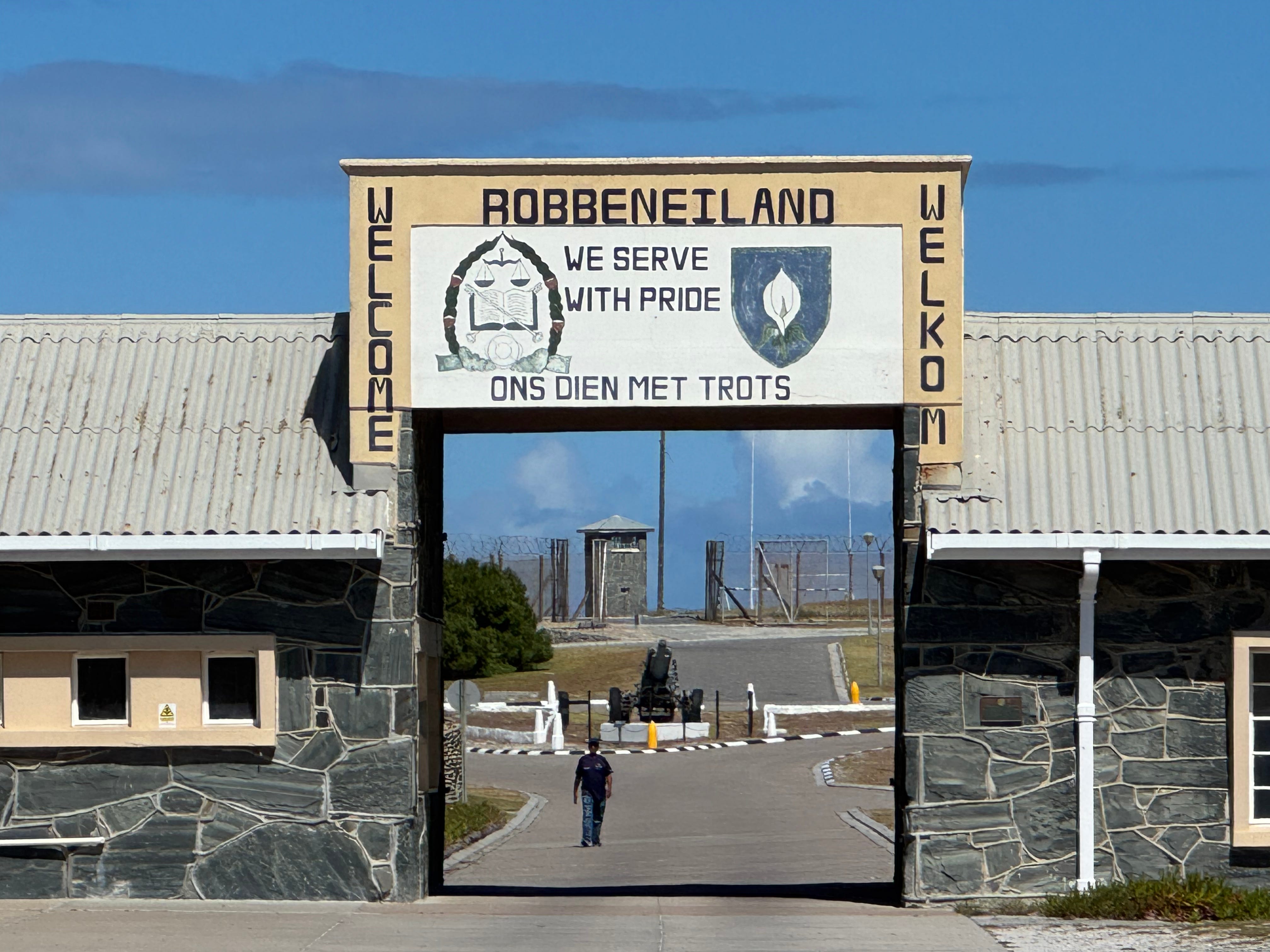
I had heard, read and even preached stories of this prophetic leader … and now I wanted to see the place where he spent 18 of his 27 years as a political prisoner.
I wanted to walk where his feet had kissed the ground.
I wanted to hold the bars that had touched his hands.
Having a chance to touch that which inspires us is human nature. It is what led me to pray in the garden of Gandhi’s ashram in Ahmedabad and stand in the pulpit of Ebenezer Baptist Church where Rev. Dr. Martin Luther King preached.
For me, much of it is a desire for connection with meaning. And … I’m sure there is an ego piece to it — and I’m not even saying that is a bad thing, because it feels pretty human, too. There is something in that connection that makes me feel greater for having touched greatness.
Yes, some of that is — even if it is just internally — basking in reflected glory. And …. there is more. I know for me when a person’s life has inspired me from afar — be it miles or years or both — there is something about that connection … that physical connection of my life with their life that elicits feelings of not only deep gratitude but of belief in the potential of what we as human beings … even me … can be.
We need heroes to remind us of the possible in a world that tells us way too much about what is not.
After taking the ferry, we boarded a tour bus that first deposited us at a group of cell blocks. Our guide — as with most, if not all of the guides are — was a former inmate. There was an unexpected grace and power hearing not just about “what life was like” for inmates or “what it would have been like for Nelson Mandela” … but to hear Terrence’s personal story of years of incarceration.
Of the despair and anger that led him to destroy property as protest against a regime that seemed to delight in destroying people.
Of how the place where he had been treated as so much less than human had become the site of a great triumph of humanity of which he was a part.
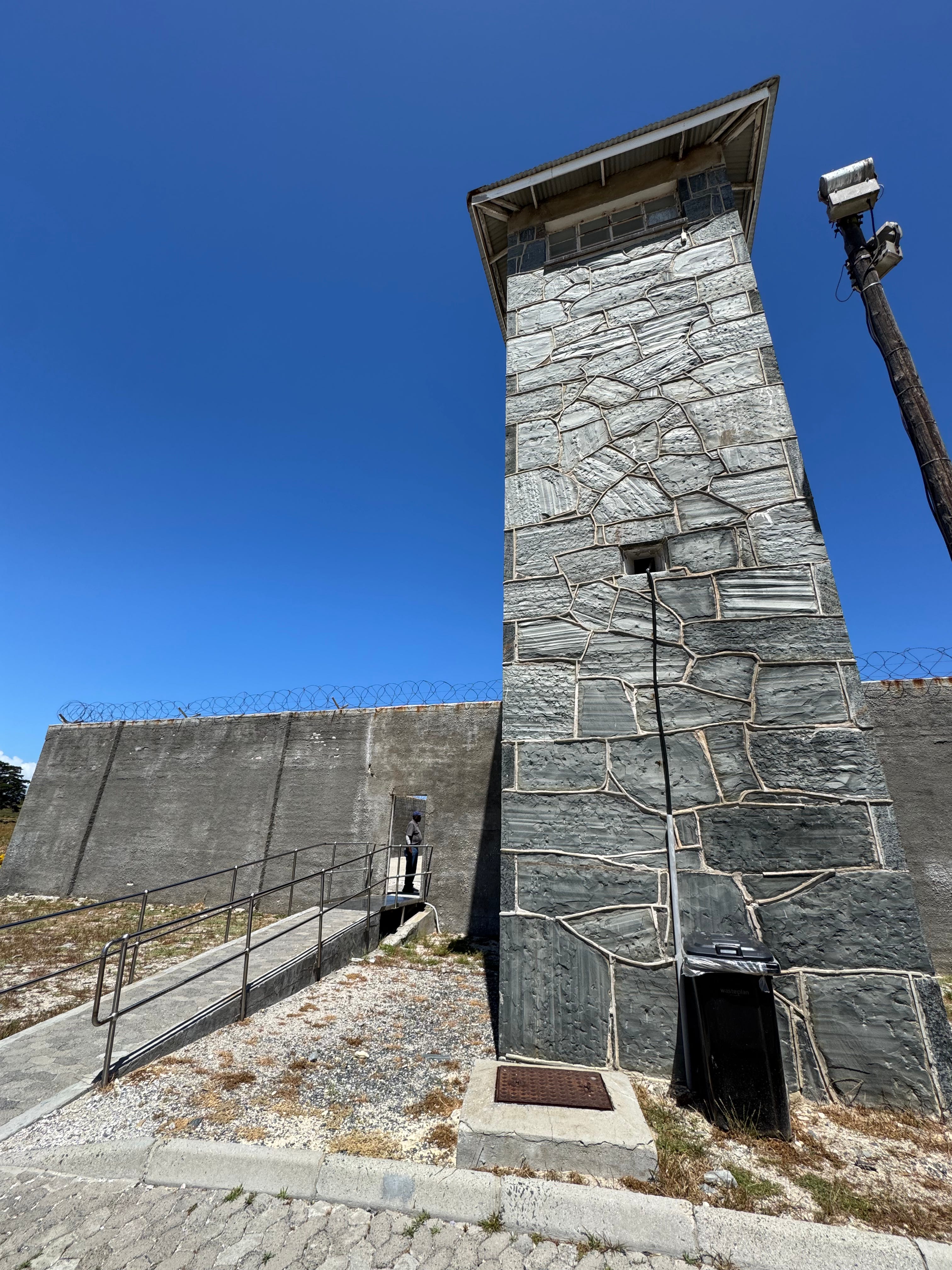
As I listened, I was reminded of what by now I should not need to be reminded … that as rightfully important as hallowed places where inspirational people have walked are to me … there is nothing that compares with the sacramental power of the living human being.
Of looking into the eyes and hearing the voice … and sometimes the laughter and the tears … of one whose name will never be in a history book or the subject of a Netflix documentary.
One who has in no less way done that sacramental work of bringing the extraordinary out of what we too often dismiss as ordinary … a human life.
I realized that blessing in that moment — a blessing in itself because too often I am not so self-aware!
I am so often conflicted about telling someone in the military, “Thank you for your service.”
Torn between wanting to honor and thank someone putting their life on the line for anything
…and how that sacrifice is almost always misused by government and repackaged as propaganda
…and how nobody ever tells teachers or aid workers “Thank you for your service.”
I had the gift of walking up to Terrence and saying those words without a trace of conflict, knowing it was a rare gift and blessing for me to be able to look in his eyes that had seen such horrors, to shake the hand that for years had grasped prison bars and to say:
“Thank you for your story. Thank you for your service.”
And then we approached the cell block where Mandela had been incarcerated. We entered into a long hallway lined with cell doors on either side.
“The fourth cell on your right,” Terrence said. “The one with the red bucket in it … that is Nelson Mandela’s cell.”
We all lined up … one by one … and each of us in turn paused, most took pictures … it was without a doubt a sacred experience.
And yet as I moved closer and closer, I noticed something … that immediately after pausing at Mandela’s cell, each person kept walking without pausing down the rest of the hallway.
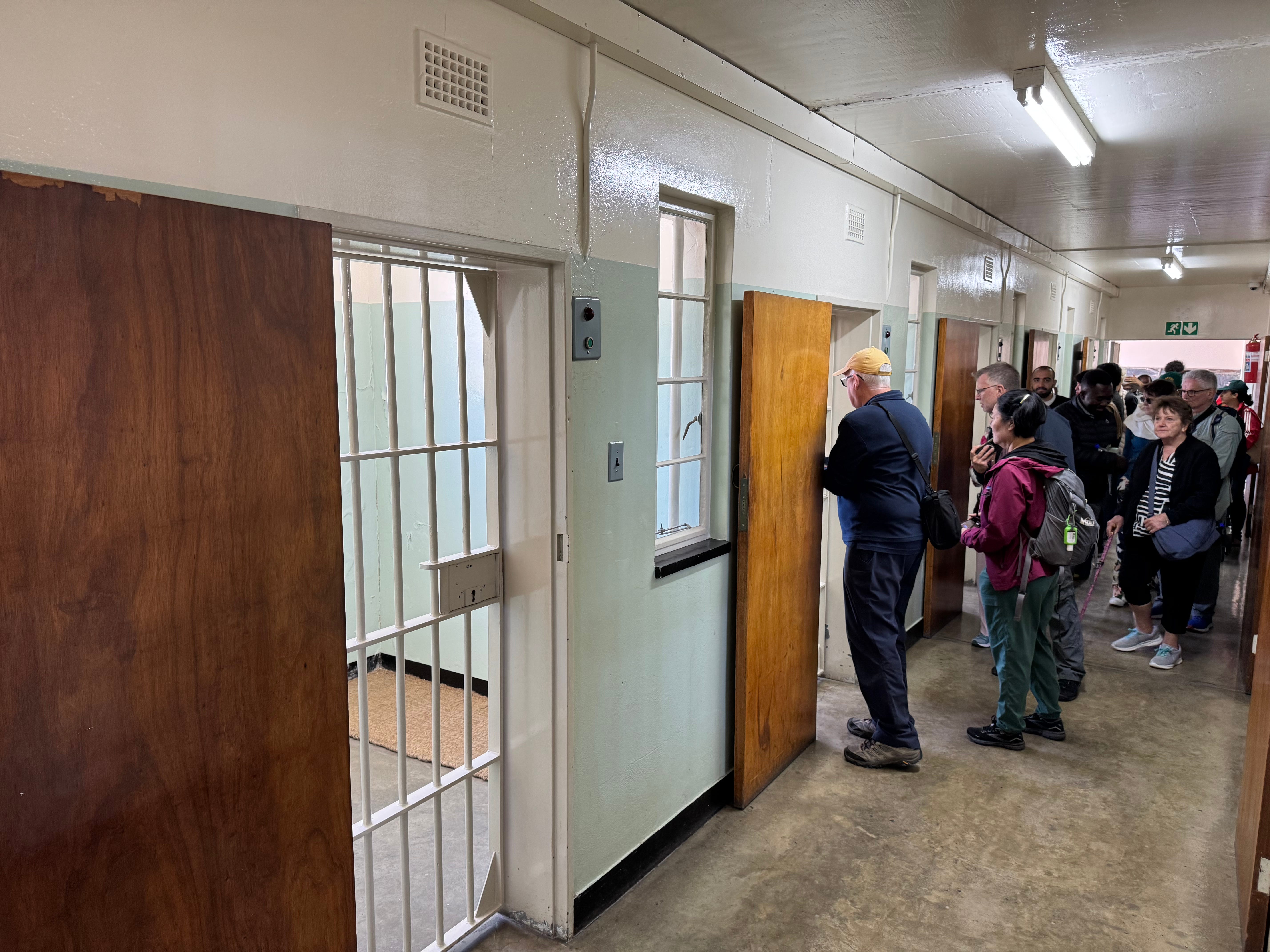
Now this is completely understandable, if for no other reason that that moment where you physically touch the bars that were grasped by this great and transformative leader could be so powerful that even for a short period of time you could kind of be in a daze.
And … as I waited … I thought of Terrence … and I began to wonder.
Which cell was his?
And then as I got closer I thought about Mandela’s cell … who had been in it before him? After him?
And as I got even closer and more and more people passed it by, I thought about the cell next to Mandela’s.
Who had been in that cell?
What had they been accused of to get there?
What was there time like?
Did they die there? How long did they live there? What tears of theirs watered the sleeping mat? What words were prayed or whispered there?
What Holy Gospel was composed of the sound of their sleeping breath or exhausted slumping on the floor after a day of hard labor at the lime quarry?
I stopped at Mandela’s cell. Conscious of the line behind me, my pause was brief. I took a couple pictures. I grasped the bars and took in the vibration of the life that had been lived there that had played such a huge role in liberating so many. I said a silent prayer of gratitude and walked on.
And then I stopped at the cell next to his.
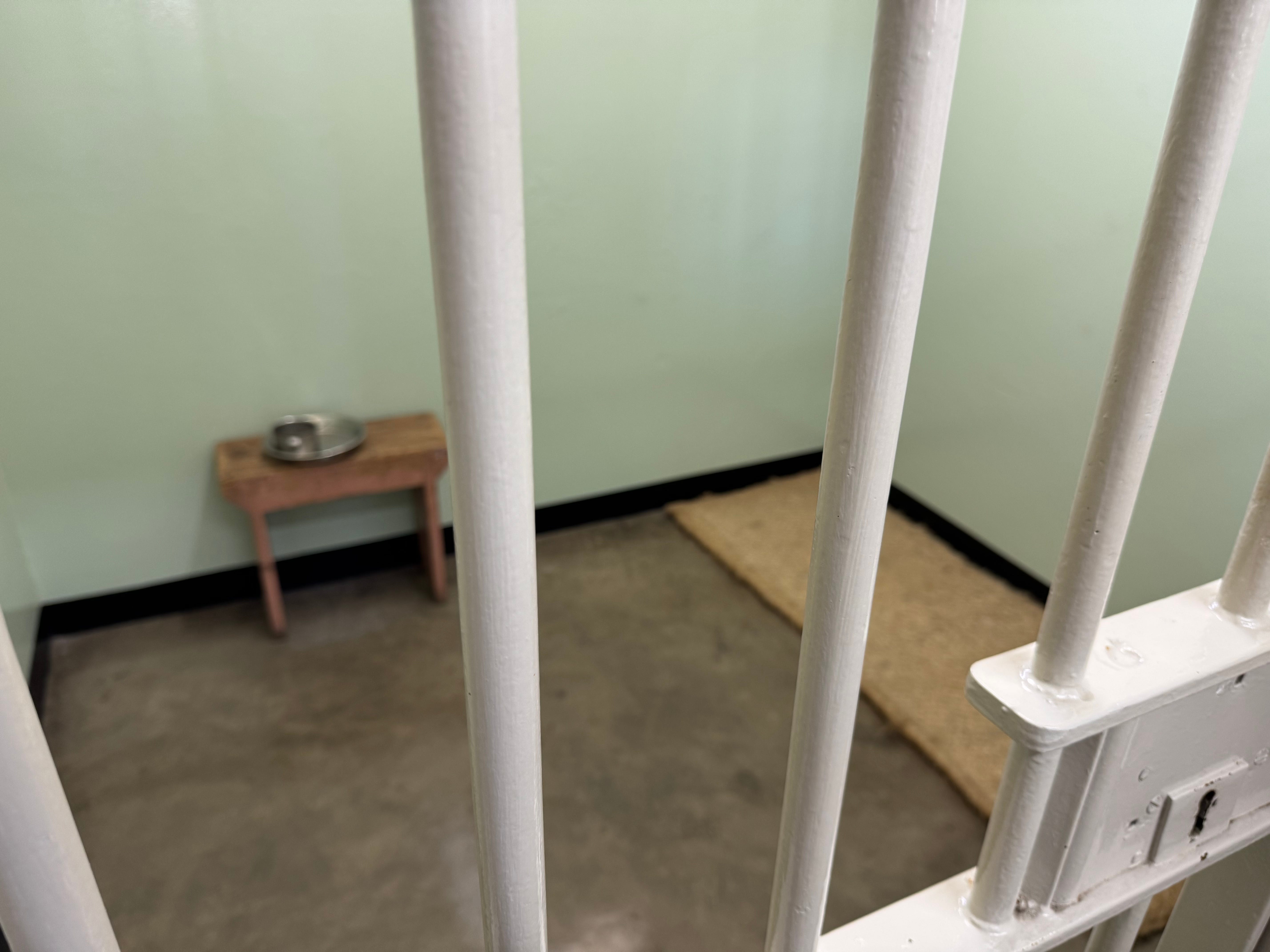
And I imagined.
I thought of visiting the Tomb of the Unknown Soldier at Arlington Cemetery.
I thought of the mothers of the disappeared in the Plaza de Mayo in Buenos Aires.
I thought of other places I have been
…the slave dungeon at Cape Coast Castle in Ghana
…the National Memorial for Peace and Justice (“Lynching Memorial”) at the Equal Justice Initiative in Birmingham, AL
…the pile of shoes in the Holocaust Museum in Washington, D.C.
Places where or memorials for people who plumbed the depth of human suffering and showed the heights of human resilience … people whose names are lost to history, but not to the people who knew them, who loved them, who grieved their imprisonment and death … and sometimes incredulously, miraculously celebrated their release and return.
I remember in Ferguson being deeply moved and profoundly amazed by the courage, resilience, creativity, leadership and joy of the amazing activists I met on the street in front of the police department.
I remember thinking … someday … there are going to be statues of these leaders here in St. Louis … and I am going to be able to be like one of those people who actually marched with Dr. King or served food with Mother Teresa or helped Bansky mix paints.
Now, I’m beginning to know different.
Those statues will never be built and those names will be lost to history.
But not to me. And not to the many others they touched.
Those statues will never be built and those names will be lost to history.
But the impact of their love and faithfulness will have ripple effects like radio waves sent out into the universe … extending far beyond sight and imagination.
I will never be Nelson Mandela or anything close … and chances are, neither will you.
And, if I’m truly blessed, when the moment comes to reside in one of those places with prisoners without names and cells without numbers are thrown, maybe we will have the courage to allow ourselves to be thrown through that sliding, barred door.
If we are truly blessed, maybe we can remember to sit with the beautiful image of God in the thrall of homeless and hunger … or recovering from violent abuse … and have the courage not only to stay with them in our discomfort but to meet their own courageous vulnerability with our own.
I hope I will remember always to pause and receive the sacrament of the name unknown, the story untold and the cell less viewed.
To pause, receive, remember and give thanks.
I remember my trip there. Very moving!
Once again powerful. I feel as though I've been to Robben Island and seen Mandela's cell, and the cell next to his. A perfect meditation on saints and all the faithful departed.